
So you’re skint and you want to be a writer? Author Nicola Garrard suggests five free steps to help your writing dreams come true.
Publishing is tough. Being lucky enough to have your book published feels like a strike of lightning. And you may have a lingering sense that it’s ‘not for the likes of me’.
The stereotype of published authors and people working in publishing is that they are privately educated, wealthy, have Creative Writing MAs, pay for literary retreats and mentoring courses, and write novels on brand new laptops in expensive cafes. While this is true of some authors, and a widespread representation in the glossy world of social media, it is not my experience at all!
I went to a comprehensive school, did not pay for any creative writing courses or mentoring, and I didn’t know anyone in publishing before I started. In some ways, this gave me an advantage. Publishers actively don’t want the same old stories from the same old demographic. And money really doesn’t have to be an obstacle.
Your voice, your life experience, family history and background matters. In terms of stories, it’s your greatest strength.
Here are FIVE tried, tested and totally free ways to attract that lightning strike. Think of it as finding storms and running out into the thunder in a metal raincoat.
- Write!
‘The harder I practise, the luckier I get!’ said a champion golfer when asked why he won so many competitions. Go after that luck by opening your notebook, book a free library computer or use the notes app on your phone, and write. It won’t start out great, but you can’t edit a blank page and the most important thing is to have something to edit.
Leave some weeks between finishing a piece of writing and going back to edit. That way, you will spot lots of things you need to change. Everything you’ll ever read in a published book started out rubbish, I promise you. But its author went back and rewrote it, again and again. For that reason, write about things you really care about and that are authentic to you, because then you will be happy to revisit your project again... and again...and again.
When you are ready, submit your work to writing competitions - there are hundreds of them and many offer free and subsidised entries. You’ll get some feedback and if you get longlisted, you’ll begin a writing CV of successes where you have a story or poem published through a competition, online or in a magazine. If you get as far as submitting your work to literary agents, they’ll be interested in seeing a track-record of publication, no matter how small the competition.
- Connect!
Get onto social media and start following accounts in the publishing world - authors, literary agents, commissioning editors, librarians, publishers, bookshops, bookbloggers, reviewers.
You’ll find out about new books coming out, writing competitions, mentoring schemes, book launches, author readings, workshops, library and bookshop events.
Lots of bookshop and launch events are free and authors will be delighted to meet you. When you go to an event, talk to as many people as possible. Ask questions, swap social media handles and don’t be shy to ask advice from the big fish in the room. Lots of publishing opportunities come from this kind of networking, and it’s energising to spend time with people who love books.
- Buddy-up!
All writers need trusted advisers before they share their work with the world, but you don’t need to pay for an editorial assessment. My first reader is my wife. She’s always honest with me if what I’ve written is utter pants.
My next readers are my writing friends who I share my work with and pay back by reading theirs. We encourage each other, give honest feedback, spot pesky typos and discuss how to make our writing better, often over biscuits and chocolate. You can use your friends, join a writing group, or start your own critique club!
My next reader - after a few more redrafts - is my literary agent. She tells me what to do to improve the work (more redrafts!) and then - if I’m lucky - a publisher and editor will read.
If your story has characters that are outside your own background and identity, use an authenticity beta reader. For example, if you have an LGBTQ character or a character with a disability, and you do not share their experience, find a reader with lived experiences to help you make your story believable and respectful.
In my second YA novel, 21 MILES, I have teenage Muslim characters. I’m not Muslim so I asked readers from a Muslim background to read it carefully to check my accuracy and the authenticity of my characterisation. I make sure I listen to feedback because being kind and respectful is very important in publishing.
If you spread out your reading buddies over time, you’ll get a new perspective at every stage to help you redraft your work until it shines!
- Show up and be nice!
Publishing is a small world. Get involved with library projects, help other writers, review books, and offer to volunteer at your local library, literary festival or start a new book club.
I’ve met mentees at my book launches and events. I will always help an aspiring authors from underrepresented backgrounds, from reading their literary agent submission and covering letter, to sending some notes on how to improve their WIP, to a short video meeting to discuss strategy, to connecting young people to publishers and agents for internships. I never charge for this and I know many authors who do the same - so reach out!
- Read, read, read!
Reading gives you the life experience of hundreds, even thousands, of characters. And while you’re reading, you’re absorbing language, vocabulary, sentence types, voice and story structure. Who needs money for expensive courses when every library book is a creative writing course in its own right?
Audiobooks count, too! They’re a sneaky way of cramming in more stories into your writer’s brain whilst doing other things - commuting, walking the dog, washing up. And all this is totally free from your local library!
I keep a notebook where I copy examples of brilliant sentences from the books I’m reading. And if I get stuck on a scene, I’ll look for a book where a writer has done something similar and try to analyse what they did.
Librarians are experts at signposting you to the best books in the genre you want to write. They will help you find inspiration and see what has been commercially successful. Publishing is a business as well as an art, so keep an eye on the market by reading newly published books to spot trends.
You can also sign up as a reviewer and get free ‘proof’ copies of books before they are published - check out Netgalley.
So, enjoy as you read, but also keep a bit of your brain asking questions like, ‘I just laughed/cried/felt scared. How did the writer do that?’
There you go! Five tried and tested tips for speeding your way to publication whatever your budget. They all free and they worked for me. Good luck with your writing and let me know how you get on.
Here are a few sources of support, free courses and information for aspiring authors from underrepresented backgrounds:
- New Writing South Working Class Writers Collective
- Open University Start Writing Fiction FREE course
- Pen to Print
- Penguin WriteNow
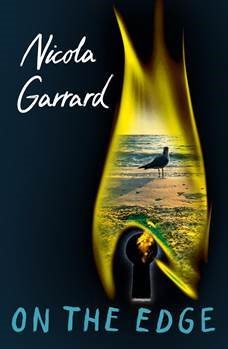
Nicola Garrard is a novelist and poet. Her YA books include 29 LOCKS, 21 MILES and On the Edge, which is about a rural working class community and is available to pre-order. For more information, or to get in touch, visit www.nicola-garrard.co.uk or follow Nicola on X: @nmgarrard or Insta: @nicolagarrard7
Comments