
Author Helen Cooper dives into what a killer hook is and how to generate one for your story.
I’ve published four psychological thrillers, but I’m still indebted to The One That Never Was – the novel that landed me an agent but not a publishing deal. Because what it did gift me – somewhat bittersweetly! – was twelve detailed rejection letters from major publishers, explaining what they’d liked and not liked about my book. Once I’d got over the shellshock of all those rejections, I scrutinised every word of their feedback. One thing came up repeatedly. Everybody was complimentary about my writing, but it was clear my novel didn’t have a strong enough “hook.”
Of course, I thought it did! It was about a young woman leaving home to escape her past. But I realised that, although it was an interesting story, its premise needed to be clearer, bolder. The word ‘breakthrough’ was mentioned. Vital in the competitive world of commercial thrillers.
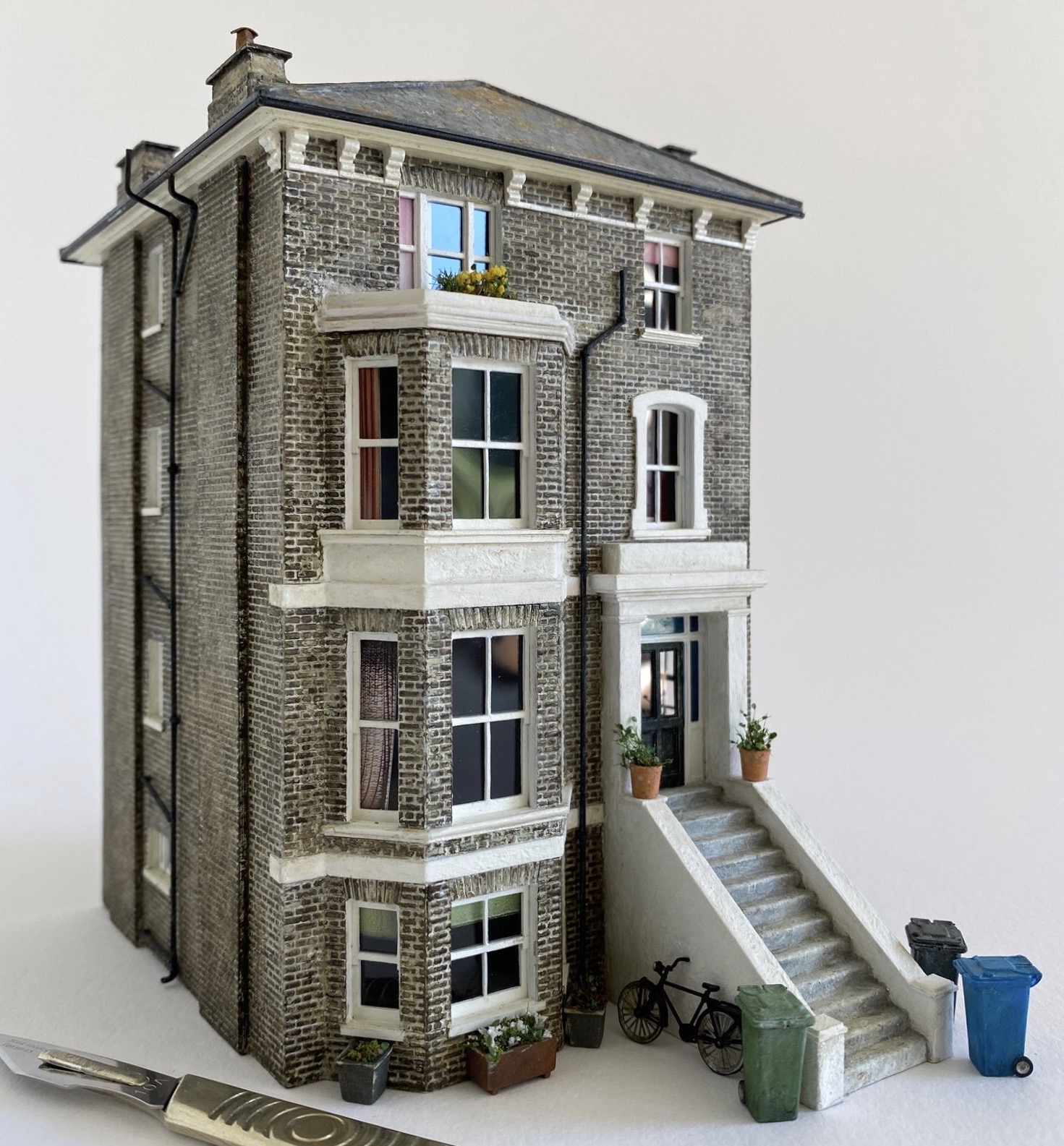
So I wrote another book. This one had the disappearance of a teenager on the first page, and a cast of secretive neighbours embroiled in the search. That book became my debut, The Downstairs Neighbour. It was marketed with the tagline ‘Do you trust the people you live with?’ and used a suburban townhouse as a visual symbol of that hook. My publishers even had a miniature townhouse built to photograph for the cover (see picture!), which they later gave me as a souvenir. It sits on a shelf in my office, alongside copies of the novel that landed me my first deal, reminding me: hook, hook, hook.
What is a hook?
You may have heard, or used, other terms than hook: premise, concept, elevator pitch. It can be argued those each mean slightly different things, but they refer to the same idea: a book’s Unique Selling Point, usually distilled into one sentence or paragraph.
If you’re planning to self-publish, or you’re querying agents or publishers, a strong hook is crucial. It’s part of the pitch you’ll include in your covering letter, as well as the blurb that will appear on your book jacket. It’s there to urge people – agents, publishers, or just readers – to read your story rather than anyone else’s. For me, this hits home when I’m at book festivals, listening to multiple writers talk about their novels. Sometimes I’ll hear an author describe their story premise and I’ll get a tingle up my spine: that’s the book I’ll be buying at the end of the day.
My bestselling novel, The Couple In The Photo, is the one I consider to have the strongest hook. Lucy sees a photo of her best friend’s husband on holiday with another woman. As she agonises over whether to tell her friend, the woman from the photo appears in the news as a missing person, and Lucy starts to unravel a tangle of secrets.
When I hit on this concept, other things about the novel quickly followed. The title; the main plot beats; the kind of person the protagonist needed to be. It isn’t always the case that these things become clear early on, but it is usually a sign that you’ve hit on a neat idea when the whole ‘package’ of the book comes alive alongside it. My publishers added the cherry on the cake with the tagline: The camera never lies. But someone is.
Creating a killer hook
My hooks tend to start life as ‘what if?’ questions. What if your spouse framed you for murder? What if you suspected your child of a crime? Taglines of psychological suspense books are often in the second person (‘They told you not to trust him. You should have listened’), or phrased as a question (‘How far would you go to protect your family?’). This tells us something about the nature of the hook in my genre: readers are being invited to picture themselves in these stories, to think ‘what would I do?’ in the nightmarish situations they present.
When I’m starting a novel, I’ll often write out dozens of ‘what if?’ questions, letting my imagination run wild. If an idea feels exciting, I’ll put it in the middle of a page and brainstorm all the possible directions I could take it in. I might realise it’s too farfetched, restricting, or not as exciting as it first appeared, so it’s onto the next. I’ll also run ideas past my writing group or other friends. If I get a tantalised “ooooh” in response to a scenario, I’ll know it’s worth pursuing!
Everybody’s process is different, of course, and mine has varied from book to book. Sometimes a character leads the way, sometimes a setting, sometimes an opening scene. But – at least in psychological suspense – intriguing characters in interesting locations are rarely enough to stand out from the crowd. They’re essential parts of the recipe, but the hook – the “what if?” – is the magic ingredient.
Helen Cooper is a writer of psychological thrillers from Derby, currently living in Leicester, UK. Her novels include The Downstairs Neighbour (2021), The Other Guest (2022), The Couple In The Photo (2023), and My Darling Boy (2024). She's been described as a master of the twisty plot!
Before becoming a full-time writer, Helen was Head of Learning Enhancement at the University of Birmingham. She has an MA in Creative Writing from Nottingham Trent University.
Comments