
Mat Guy's childhood dream was always to write stories, but things rarely work out the way we think we will. Here, he tells how he found his way back to his dream career through loss, luck and football.
The transition from non-fiction to fiction was never supposed to have happened. Because there was never supposed to be anything to transition from.
From a very young age I had been absolutely captivated by spooky stories, suspense, the unknown. From The Magic Faraway Tree, and The Lion, The Witch, and The Wardrobe, to The Hound of the Baskervilles, The Kraken Wakes, and Nigel Kneale’s glorious Bernard Quatermass.
It was everything, the places they sent me to, and the mystery they contained.
From a very young age I knew I wanted to do that too. I wanted to write stories that sent a shiver down your spine.
I followed all the best advice – read and read and read until you find out the sort of writer you want to be, then write and write and write until you find out the writer you actually are.
I studied books and stories, the stories behind the stories, to degree level. I wrote short stories trying to replicate the wonder I felt when I read great, atmospheric work – from The Odyssey all the way to the modern day and Stephen King.
Degree done, I realised that I wanted to be a magic-realist like John Wyndham, where the fantastical, the otherworldly, collides with the everyday.
But there was a problem. One I hadn’t anticipated. I couldn’t do it.
I didn’t have the self-belief to build worlds, to build narratives and characters that felt genuine to me, that didn’t feel two dimensional, stagnant.
The pressure of wanting to emulate my literary heroes, create something as vivid as Mary Shelley’s Frankenstein or Sir Arthur Conan Doyle’s demon hound of Dartmoor only compounded things.
Ideas quickly withered in a world where I couldn’t suspend my own disbelief, or rather, my own scepticism at characters that just didn’t seem convincing, in environments that didn’t feel fully realised.
It was sobering. Heartbreaking. Folders of stories that hadn’t become what I had hoped they would be. A monument to my failings, which did nothing for someone who has always struggled with their own sense of self-worth.
I didn’t officially stop trying, but somewhere along the line, I stopped trying. For ten years.
Then chance played its hand.
My grandfather had always been a non-fiction fan, preferring ‘real’ stories to ‘made-up’ ones – a great irony as his ‘made-up’ stories at bedtime used to be the highlight of my stays with my grandparents during the summer holidays.
He had also been passionate about football, and his local team, Salisbury. He would take me all the time, and I fell in love with the team, the club too. It was our thing. And I would still go even after he passed away. Spending time in the stadium, I could feel him there, memories mingling with the present. It was a great comfort.
But then, in 2014, the club went bankrupt, disappeared, a bereavement all over again.
On Saturdays that I would have been watching Salisbury, I found myself travelling, trying to find the warm and welcoming embrace of Salisbury, of Grandad's memory, at other clubs.
And as I did, I started writing a blog about it, about the trauma of losing my connection to grandad, the past, but also the people and places, far and wide, who made similarly wonderful little sanctuaries at obscure football clubs few people cared about.
The people, the places, their stories, it all flowed into the blog. The bittersweet of what had been lost, being found again through like-minded spirits and places.
And people liked it. Enough for a publisher to want to turn it into a book. So, we did. Followed by a second book, a third. All celebrating the communities and cultures, their meaning, one club or national team at a time.
A dream had come true. After all this time, I was an author. Just not the kind of author I thought I was going to be.
Then chance played another hand.
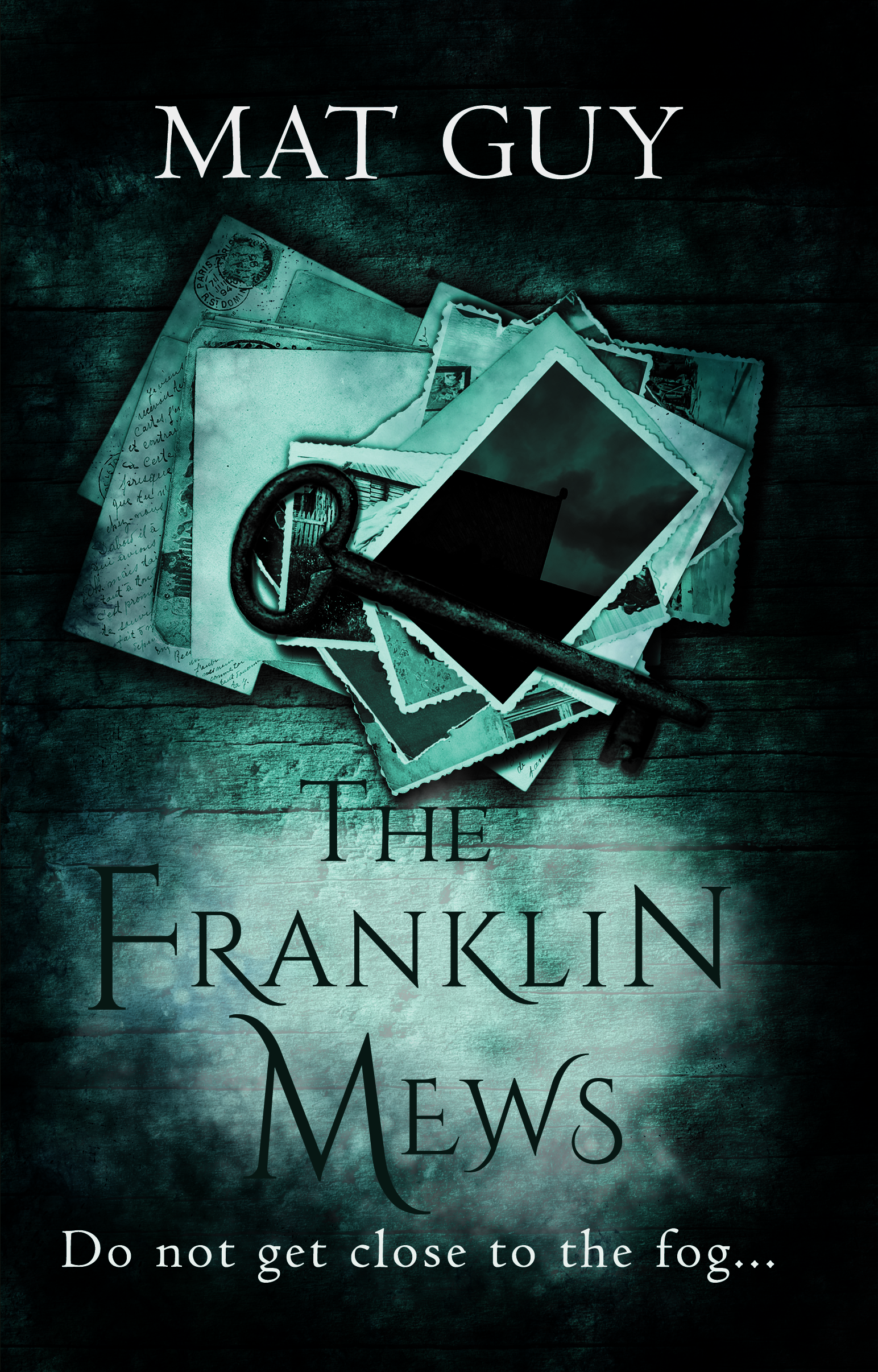
COVID-19, lockdown, 18 months of being furloughed from my job. More time than I had ever had before. And an idea. The Franklin Mews. A suspenseful, atmospheric mystery. A work of fiction.
But this time, the characters came, the world-building felt set on solid foundations. I had found my voice, and some self-belief, born out of years of meeting real people, describing real places.
Through non-fiction I had found the secret to building convincing characters, settings, dialogue. Inspired by my non-fiction writing style I created my way of writing believable, honest, genuine fictional people and places.
Writing in one genre has most definitely been the secret to me being able to live out my childhood dream – of writing spooky stories. Of writing The Franklin Mews.
Looking at writing in a different way, taking yourself out of your preferred style, has been hugely beneficial. For me it has enabled me to finally become what I had always hoped of being – a novelist.
And I remain ever hopeful that The Franklin Mews will be a book that the little boy from all those years ago would want to read. Be captivated by. Lost in the unknown…
Get your copy of The Franklin Mews here.
Mat Guy lives in Southampton with his wife and long-suffering football widow. He is a regular contributor to football magazines, including Scotland's premier football journal, and has written five books, including Another Bloody Sunday (Luath Press 2015), detailing, among other things, falling in love with Accrington Stanley, accidentally starting a football team in Bhutan and exploring football from Tibet to the Faroe Islands. The Franklin Mews is his debut fiction novel.
Comments