
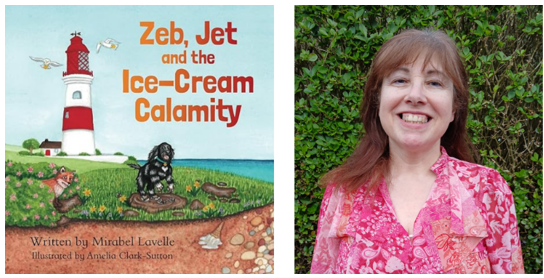
We spoke to author Mirabel Lavelle about her self-publishing experience and the things she’s learnt during her journey.
Q: How do you finance a self-published book?
A: Before the book came out, I knew there would be costs involved. I spoke to people who had previously self-published to get an idea of costs, as this sort of information wasn’t readily available online. There is still prudishness about asking how much things cost in the self-publishing world.
However, I soon found out that I would need around £3-4000 pounds to cover everything for my picture book. When the book comes out, you need to think about how to recoup some of your investment. It’s important to give your book a reasonable RRP.
But I found the switch from writing to selling difficult because suddenly you’ve got a pile of books in your house that you have to sell. I found myself quickly learning to become a business person. There were many things I didn’t realise. For example, once you sell £1000 worth of books then you have to register as a sole trader with Custom House and you will need to keep careful details of all your expenses and invoices.
I’m really pleased to say that I’ve recouped three quarters of my investment so far.
Q: Who did you find to be your target buyers?
A: I thought my ideal customer would be parents, but they have a lot of expenses. I made a mistake with schools because I sent out a flyer with pricings for school assemblies and workshops and didn’t get huge uptake. I realise now that it’s better to offer a free assembly and offer bookselling to gain that initial support. I appreciate it’s important for writers to be paid for their time, but as a newbie I felt that this was worth doing.
I also made connections with local libraries and I get to do events there with different age groups. My background as a teacher helps me to be dynamic when delivering varied sessions.
My main customers have been Baby Boomers. Grandparents have disposable cash and they’re happy to buy books for their family and grandkids. It’s important to consider the different audiences and age groups that you can market to. I also managed to get my book into a few independent bookshops, but selling it into Waterstones proved to be much more of a challenge.
Q: How was this a challenge?
Well I learnt that my book needs to be on Gardners, which is a leading wholesaler of books. You need to pay a fee for Gardners, but their website has useful information on how to get your book stocked with them. I'm happy to say that Waterstones stocked my book in time for Christmas and last month I held my first author event at my local store!
Askew is also the UK’s library supply specialist and I needed to speak to them in order to get my book into libraries.
Q: And how does it work with self-published books and Amazon?
A: For every book sold, you get just over £2. Amazon cover the printing costs.
If you are self-published and you want to be on Amazon, you need to have a chat with your publisher before the book comes out. You need the right Nielsen ISBN and your book has to be registered with the British Library. Your publisher can help with this as they will need to send six copies to the BL. They will also need to prepare your book so it’s ready to upload on Amazon, so you can rely on your publisher during this process.
Q: Amazon is also known as a place to gather book reviews. What has been your experience with reviews?
A: It’s a learning curve. At first I was so excited for my book to be published and I didn’t think to follow up with people and customers, but it’s only now that I’ve learnt to ask for them. It’s hard to ask, especially if you’ve just made a sale as it feels presumptuous. But do ask. Don’t be afraid as people often need reminders. My present rating is over 90% 5 stars.
Q: Is there any other advice you’d like to give self-published writers?
Prepare to be resourceful. Be good at listening and take useful advice on board. Find your community. I’m a member of several local writing groups who provide invaluable support. They hear about opportunities or have other school contacts, which helps me to spread the word about my book.
Try to carve out some time to keep being creative. When you are self-published, you are everything. For a long time, I was just a sole trader, answering emails and all of the admin tasks that take up so much time. Remember why you started doing this in the first place – because you love writing and have a passion for storytelling.
Also make sure that you get full copyright on your book. I did take advice on copyright from an IP solicitor so that I could keep as much of the copyright as possible if I decided to take my second story elsewhere.
Q: Would you do anything differently?
A: I wouldn’t send out price lists to schools. I also wouldn’t rush to choose my team. I did get it right eventually – finding the best illustrator and publisher – but this did take time. Do your research and test the waters before signing a contract with an illustrator. Make sure that the illustrator is on board and respects you and the message of your book.
Keep your receipts because one day the tax man will ask for them!
Connect with Mirabel via her website: Home - writebymirabel.co.uk
Comments