
Nicola Garrard, author of On the Edge, shares her experience of publishing a third novel.
It’s been four years since my debut Young Adult novel, 29 Locks, was published, changing my life forever, and two years since its sequel, 21 Miles. Since then, I’ve had the privilege of speaking at literary festivals, visiting schools, libraries, book clubs and writers' groups, mentoring aspiring writers, running workshops, and judging literary competitions. With everything going on, if it hadn’t been for my wonderful and supportive writing friends encouraging me to submit writing every month to our group, I might never have finished On the Edge.
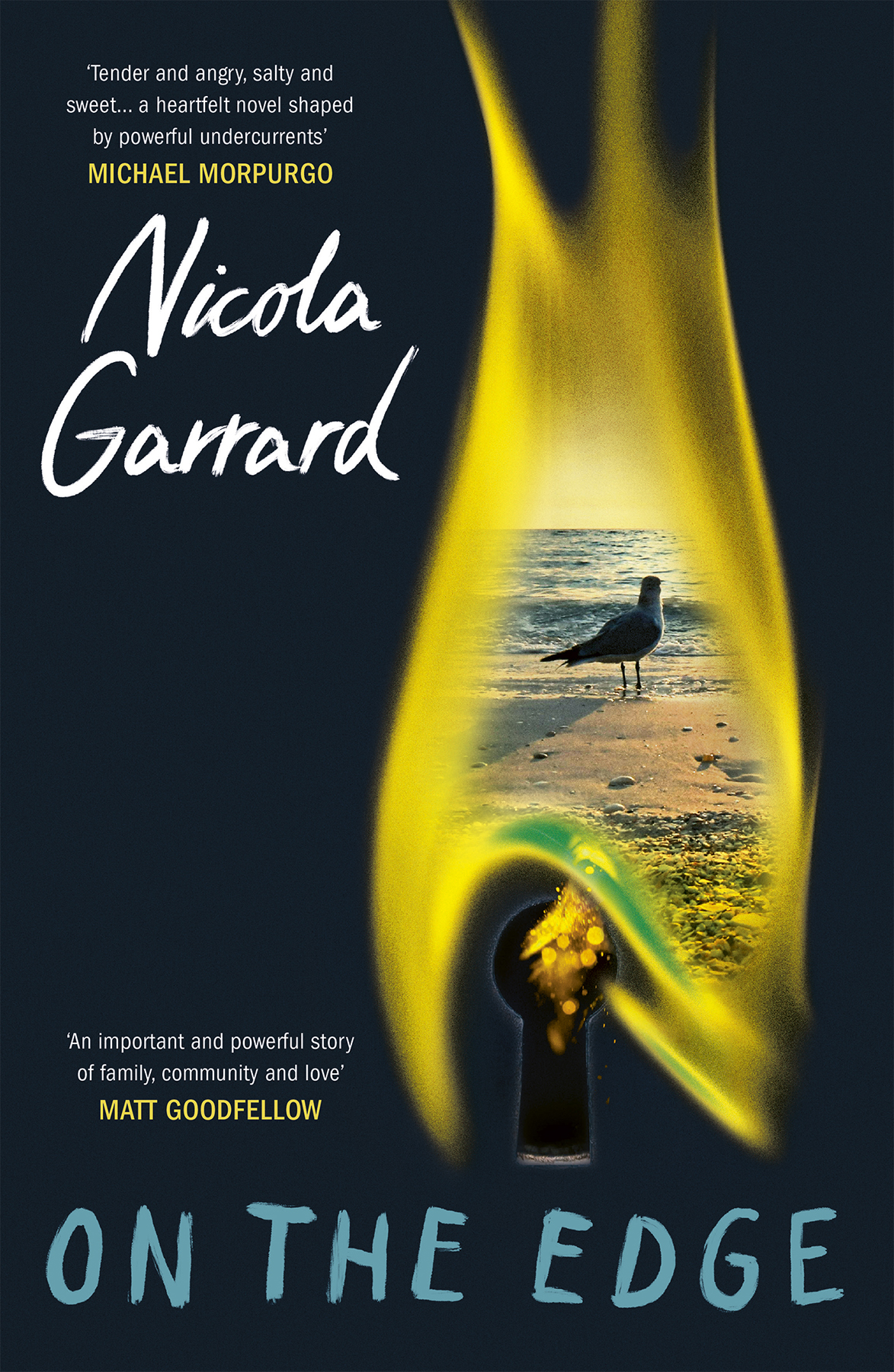
Having written about London teenagers in the past, it felt like the right time to write something closer to my own experience. On the Edge is a literary YA/Crossover novel about three brothers growing up in poverty in a picturesque Devon seaside town, full of second homes and Airbnb lets. It was inspired by my childhood in South Devon, where my mum worked several jobs to make ends meet, including in a fish processing factory. Along with my dad, she taught me to appreciate the beauty of nature: the beaches, cliffs, and moors of the South West.
In On the Edge, two young brothers sneak into off-season second homes for free Wi-Fi and a taste of luxury, while their older brother becomes radicalised by a Meibion Glyndŵr-style terrorist group dedicated to torching holiday homes. What could possibly go wrong?
I’m thrilled that On the Edge went out on submission to YA commissioning editors in June 2024 and was offered a publishing contract with Old Barn Books. Since then, the wheels of editing, design, marketing and PR have been set in motion to bring the story to readers in August 2025.
Here are three questions I’ve been asked by my writing friends about publishing a third novel:
- Does the submission process get easier?
In a word, no! Published authors are always back at square one the minute their book is released and find themselves on the old familiar rollercoaster of excitement and disappointment, which is almost identical to the process of querying literary agents. From the moment my agent sent the manuscript of On the Edge to publishers, I could barely concentrate, constantly dreaming and checking my emails every five minutes.
One difference between querying agents and agents submitting to publishers, is the feedback you receive. Rejections from publishers tend to be more detailed and praising, so that you and your agent aren’t discouraged from submitting to them again in the future. Sometimes, rejections came with an invitation to share my next project. “My door is always open,” one editor said. It’s still a ‘no’ but it is hard to feel quite as crushed.
When an editor I admired approached my agent with an offer of a pre-acquisition meeting, I pulled every novel she’d edited from my bookshelves and wound myself up prematurely with daydreams. The offer fell through. Later, I met an editor at a book launch who told me “Your new book will win prizes” and said how much she had wanted to buy it, but that her PR and marketing team wouldn’t agree. Editors, too, feel the sting of not getting what they want; perhaps an imprint already has a similar book lined up, or a previously published similar book hadn’t met sales targets. To stay afloat, I had to reread my indefatigable agent’s reassuring words: “It will come,” and the kind rejections.
So, no; the submission process doesn’t get any easier and there’s no way to speed it up. For publishers, buying a novel has to be a business decision. It’s also a team effort, requiring various people to find the time to read a manuscript and decide whether it will meet sales targets.
And they don’t always agree. Editors must fall deeply in love with a book and be ready to support it through thick and thin, but they also need to convince their more practical and detached colleagues in PR and marketing, who base their decision on the novel’s potential for future earnings and how it compares to other recently published books.
- Can you switch genre and readership in later books?
Many authors want to write books for readers outside their debut genre or target audience. This is fine, but those responsible for Marketing and PR will want to know if your existing readers will want to read your new book, or if you're starting from scratch in terms of publicity, essentially treating it as a debut.
While I moved from urban to rural settings, my new novel will appeal to adult readers who admired 29 Locks. Whilst On the Edge is more autobiographical and takes place in a rural setting, it shares the same focus on family relationships and a desire to expose social injustice. I hope readers who read my debut as teenagers will now follow me to On the Edge as adults.
Many authors successfully change their readership, either ageing subsequent books up or down. Take Jacqui/JP Rose, for example. As Jacqui Rose, she’s known as the “queen of urban crime,” writing adult thrillers with dark and twisty plots. But as JP Rose, she has written beautifully rendered stories set in lush Jamaica and the sweeping Yorkshire Moors, with tender contemporary YA, historical MG books and an uplifting pony adventure series.
What matters most is the writing. If that’s strong, publishers will appreciate working with authors who have experience with the process. As I explain below, they may feel also more at ease when working with an established author.
- Is publishing a third novel less stressful?
When I trained as a teacher, the emotional toll of each lesson was huge. I worried, over-planned and over-marked, and when things went wrong, I blamed myself. Now, I have a more realistic view of what teachers can achieve, given the social and financial pressures they face. The same goes for my writing career.
I’ve seen how a publishing team works, and I appreciate the energy and commitment of the hardworking staff. Editors, ever tactful, nudge me towards changes that will improve the novel for readers. I’ve learned to trust them completely and am quicker to follow their suggestions. I also know the roles of marketing and PR, and what value I can add to that process.
I still love the excitement of events and festivals, but I know not every book can be a bestseller or win competitions. What matters is producing a quality novel that brings loyal and enthusiastic readers. Aware that this could be my last book in the strange world of publishing, I’m throwing myself into the publicity process, booking author events and preparing for the release of On the Edge by writing guest blogs, responding to magazine interviews, recording podcasts and producing my own social media content to connect to readers.
Five years ago, when I was querying literary agents, I could never have imagined this life would be possible. Authors often grumble (sometimes with good reason, given the vast disparity in income between writers of equal skill) that their books aren’t successful or they feel let down, forgetting that there’s an army of talented aspiring authors waiting for their chance. I will never forget what a privileged position I am in. I am deeply grateful to my publishers, their editors and PR teams who have invested their talent and resources into my books.
Nicola Garrard is the author of the critically acclaimed novels 29 Locks and 21 Miles. She lives in West Sussex with her wife, three children and pet dog. On the Edge will be out on 14th August 2025. You can preorder On the Edge now. Find Nicola on instagram as @nicolagarrard7, X as @nmgarrard or visit her website nicola-garrard.co.uk.
Comments