
In this extract from The Happy Writing Book, an inspiring guide for seasoned writers and aspiring writers, Elise Valmorbida encourages you to infuse your writing with sound.
Here are some of my notes about a courtyard in Venice: Leafy vines and creepers veiling tall stone walls. Glimpses of old terracotta rooftops beyond. Soft slanting sunlight. Birds swooping down for crumbs. The aromas of coffee and baking. Expert waiters to and fro, serving tourists idling at wrought-iron tables.
But this recollection is incomplete because the sound has been turned off. Distinct from the hush of conversation – voices, accents, languages – there were the song-birds, busy and excitable with spring, twittering. There were doves and pigeons, purring, purring. One of the waiters whistled as he worked: Venetian tunes, Frank Sinatra, opera. From a nearby campanile, church-bells clanged, loud and deep and slow and irregular. Dimmed by distance, other bells thudded and donged. Sudden bells from another, closer church tumbled in, cascading from high to low notes, repeating, dwindling, until only the after-sound lingered, almost audible, almost an imaginary bell-breath.
In Wallace Stevens’ poem ‘Thirteen Ways of Looking at a Blackbird’, this stanza, one of thirteen ways of looking, is actually about thinking and listening:
I do not know which to prefer,
The beauty of inflections
Or the beauty of innuendoes,
The blackbird whistling
Or just after.
Sounds, and their after-sounds, are as evocative as smells. But what do they evoke? Memory, emotion, a strong sense of place.
Think how irresistible a stray song can be, the way it reaches your ears through the muddle of noise in a public space: you are taken, almost bodily, into another context, another time.
And think about the influence of sound design in cinema. Alfred Hitchcock said that thirty-three percent of the effect of Psycho was due to the music. He was talking about Bernard Herrmann’s alarming score. It is said that Psycho was only approved by censors – after earlier rejection – because the famous shower scene was temporarily stripped of its music. As I write, I can hear those shocking, stabbing, screeching sounds.
Don’t forget the influence of sound in writing.
Think of yourself as composer and conductor too. Summon up a soundtrack to be heard in your reader’s mind. You don’t need years of musicology, you just need to hear, in your mind’s ear. Think of yourself as a Foley artist crunching on gravel or slamming doors. Be an aural designer, releasing sound effects from your infinite catalogue of squeaks, squelches, swishes, tinkles, crackles, rumbles, hums, thuds, throbs, growls…
If you listen more effectively, you’ll write more effectively. You’ll hear the rhythms of sentences, you’ll hear the tones and cadences of spoken words, and you’ll be better able to fine-tune it all.
Auditory skills can be enhanced through regular training – a kind of earful meditation. Set a timer for 5 minutes. Close your eyes and concentrate all of your attention on listening. Don’t interpret or evaluate what you hear. It just is. If your mind wanders away, bring it back to raw listening. Try perceiving the soundscape in layers. First, your own sounds, your breaths and your body’s inner workings. Then, any individual sounds that come from outside your body, nearby. Then take your attention to places further away, where the sounds are still distinct. Notice them. Awaken your ears to all the indistinct sounds that mesh to make the wider aural world beyond: perhaps the noise of weather, distant reverberations, the hum and drone of the city. Having built up these audio layers, listen and pay attention to all these sounds at once, but refrain from making stories, explanations or judgements. Keep listening until the timer goes off. Then, if words come to you, write down what you have heard.
If you do this focused activity often enough, you may become generally more sensitive to sound. It’s likely that you’ll detect more, discern more. Your writing will resonate more. And, I hope, your appreciation of life will be greater.
*
This is an extract from The Happy Writing Book: Discover the Positive Power of Creative Writing, by award-winning author Elise Valmorbida. Published internationally by Laurence King (Orion/Hachette) in September 2021, The Happy Writing Book is an inspiring guide for seasoned writers and aspiring writers, and anyone who wants to enhance their creativity and wellbeing.
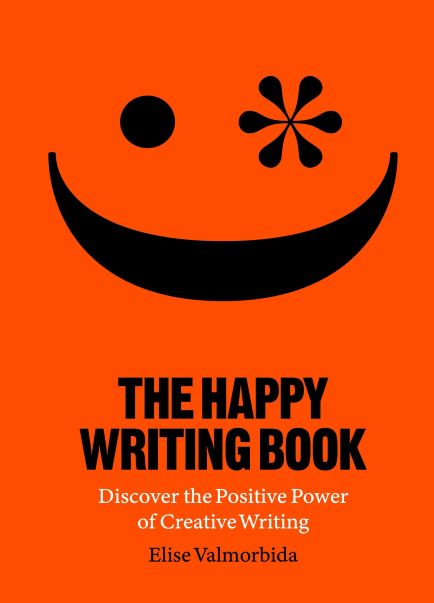
Praise for The Happy Writing Book:
‘There are many guides to good writing but none as valuable as this.’
—Oliver Kamm, author and columnist for The Times
‘Writers, teachers, diarists, wordsmiths and good-lifers: get hold of this great book! It's playful, serious, encouraging and rigorous at the same time. Elise Valmorbida is a minimalist, deep guide to what we can do with words... and why.’
—Tobias Jones, award-winning author, community-builder and journalist for The Guardian
‘Beautiful, clear, wide-reaching and hugely generous to readers. It also feels, unlike a lot of other books about writing, very much a part of the rest of the world.’
—Bryony Lavery, award-winning playwright and author of Frozen
'Few writers can share what they know like Elise Valmorbida, and even fewer teachers can write like her. She draws on a wealth of experience, across multiple genres and outside writing altogether. But her greatest talent is her belief in other people's creative potential, and in the potential for creativity to bring happiness. Relevant to both seasoned writers and newbies alike.'
—John-Paul Flintoff, author of How To Change the World
*
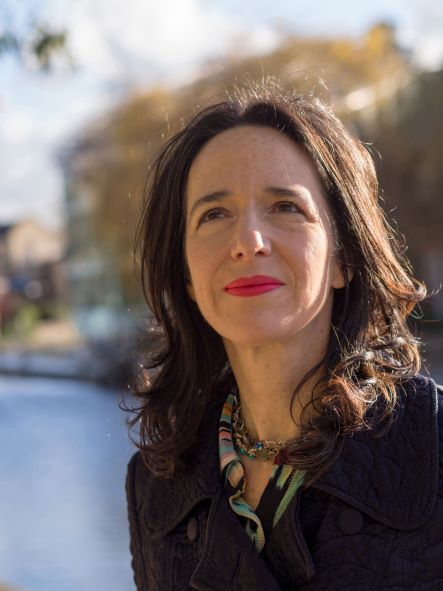
Elise Valmorbida has published journalism, poetry, short stories, three non-fiction books and four novels including The Madonna of the Mountains (Faber & Faber), which was translated into several languages and won Australia’s biggest literary award in 2019. Elise was honoured as an Edinburgh International Film Festival Trailblazer for her work as indie film producer and script consultant. She teaches creative writing at Central Saint Martins, Arvon, Faber Academy, Guardian Masterclasses, literary festivals and community-building organisations. There’s more about the author at www.elisevalmorbida.com and you can follow her on insta @elisevalmorbida
Very useful, reminds me of the power of certain songs that take me right back in body and soul to really poignant moments in my life, thank you Elise