
For many authors, securing an agent is a key milestone on their way to publication. But what does an agent bring to the table? In this extract from her article in the Writers’ & Artists’ Yearbook 2027, Vicki Willden-Lebrecht sheds light on an agent’s role and invites the budding creative to ask themselves some essential questions before they approach an agent.

Commercial and creative success demands dedication to artist and author care. That, fundamentally, is what an agent does to make things happen for their talent – writers, illustrators, visual storytellers or a hybrid of them all. Agents make what is already on the track move faster and with less friction. We power the engines and the wings, but we are not the plane.
An agent should add value at every stage. We should make each part of your journey better: creatively happier, financially stronger, strategically smarter and ultimately more successful. I once described an agent as a taxi. You can walk to your destination alone; that is, of course, possible. But it may take longer, feel more gruelling and deplete energy that would be better spent elsewhere. The taxi, on the other hand, gets you there more comfortably and often more efficiently. And crucially, the driver knows the backroads.
Of course, some people enjoy the walk. But there’s a difference between walking for pleasure and walking towards a destination without a map. When you don’t know the route and have no guidance, it can feel isolating and lonely. When you’re building a career, trusted support and reliable relationships just make the whole thing more enjoyable on every level.
Navigating the publishing industry can feel like aligning the stars: secretive, gilded with mystery, a world of clever people in rooms you want to be part of. That mystique is part of its magic and allure. [. . .]
The journey from idea to publication
You have an idea. A portfolio, a story. A body of work or, as publishing contracts call them, your ‘Works’. So, what do you do next?
Knowing yourself matters: it helps you to know where to start.
First of all, think about where you are in your writing career. Are you just starting out? Do you have one story to tell, or many works in the making? Do you want to switch careers? Or perhaps you’ve already been published and have a backlist that’s selling but which could be doing more?
Before you approach an agent, ask yourself (and be honest about):
- What area of publishing does my work truly suit?
- Where do I need the most help? Is it editorial development, shaping the pitch or synopsis, or refining the world-building?
- Do I already have a particular publisher in mind?
- What are my ambitions?
Once you’re clear on those questions, you’ll have a better idea of the guidance you’re actually seeking. That clarity will shape your next steps and form the foundation of your early conversations with an agency. And when you do begin working with an agent, they will of course advise you, helping you see more clearly what is possible and where the real opportunities in your work lie.
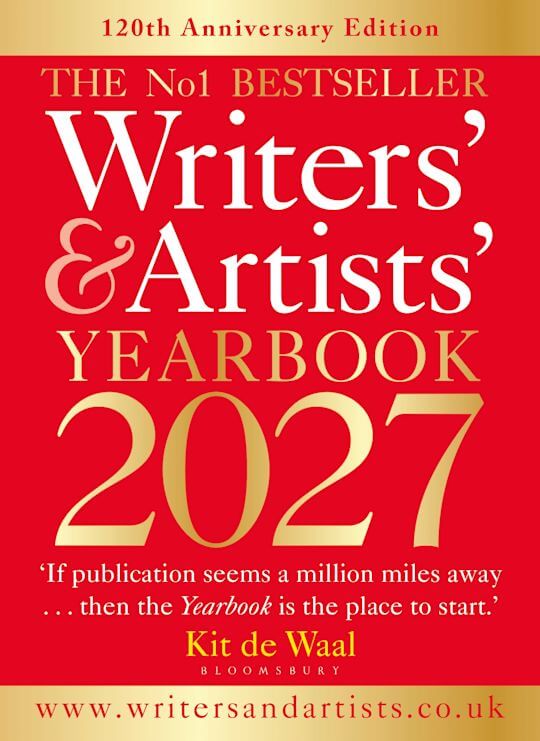
Get your copy of the Writers' & Artists' Yearbook 2027 at Bloomsbury.com.
Vicki Willden-Lebrecht founded The Bright Agency in 2003. It is one of the UK’s foremost agencies, representing around 10% of the children’s illustration market. Bright brings together publishing, film, TV and licensing under one roof to grow both emerging talent, such as The Storm Whale (Benji Davies, Simon & Schuster 2013), The Bear and the Piano (David Litchfield, Frances Lincoln Children’s Books 2016), and Sue Hendra’s Supertato series (Simon & Schuster), as well as heritage properties, including the Shirley Hughes estate, into global brands.
Comments