
We spoke to author Natasha Siegel about her UK fantasy debut novel, As Many Souls As Stars, and her love of gothic fantasy.
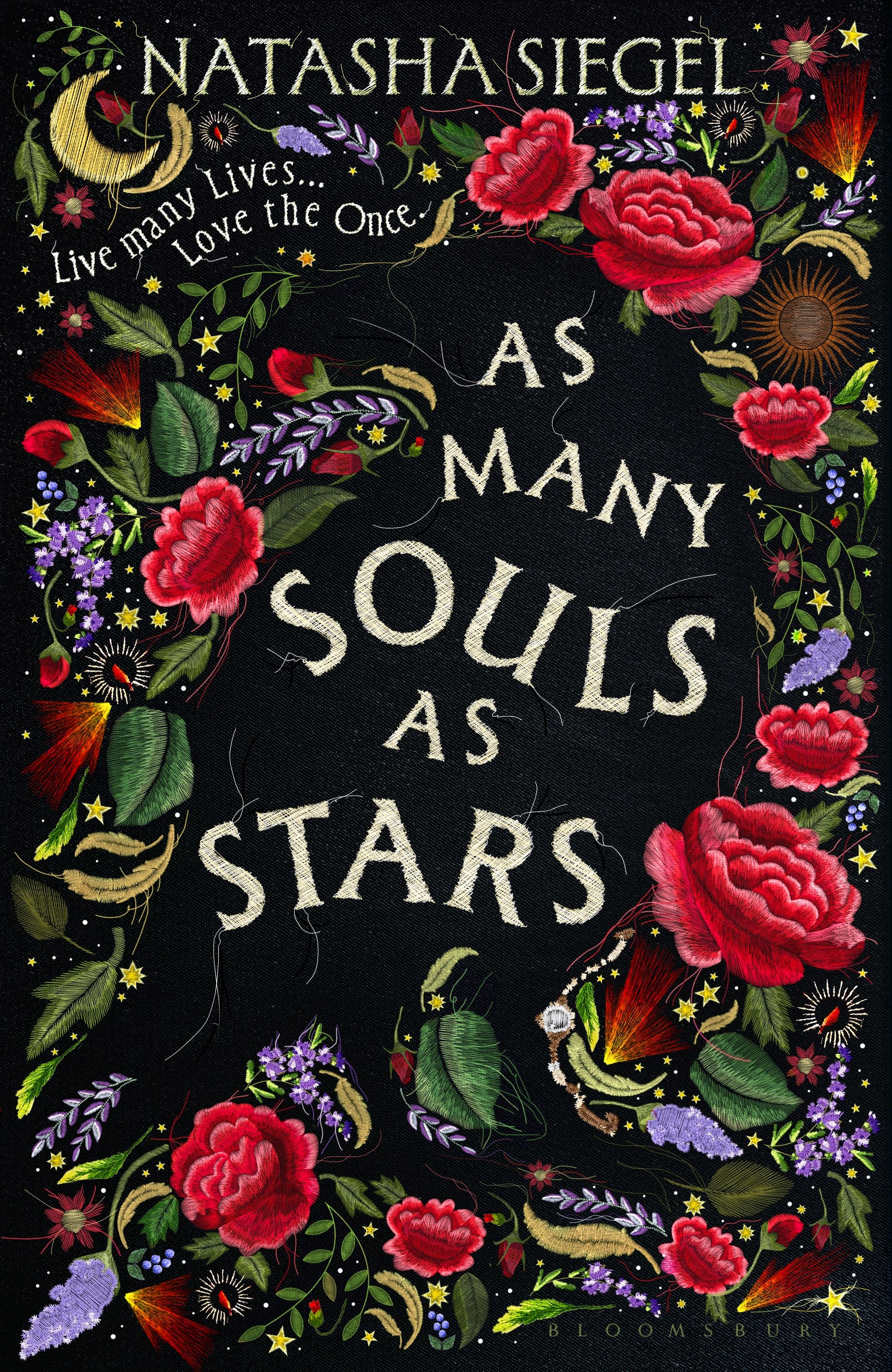
- As Many Souls As Stars is your UK fantasy debut novel; when did you get the idea for its creation? And what was the initial spark?
While studying in York, I spent much time working on both Gothic literature and on Renaissance tragedy. The initial inspiration really was reading Marlowe’s “Doctor Faustus”—I felt that the play was ultimately about the intertwining of otherness and queerness with violence: the violence we are willing to inflict upon ourselves, upon others, in our search for meaning. It had this rawness I really loved and I wanted to write something similar! I was curious to explore these ideas and consider how they might interact with queer womanhood, in particular; to bring a female perspective to a deal with the devil. That was the origin of As Many Souls As Stars, although of course it evolved beyond that in the process of drafting and editing.
- Miriam and Cybil are two brilliant main characters and their character development throughout the story is incredible. How did you bring them and their complex dynamic to life? And what advice would you give to writers who are struggling to create authentic feeling characters?
I actually found both of them quite tricky to pin down at first! It took several drafts before I really felt I understood Cybil in particular. An important element of their story was the use of the dual third-person POV, which was something I really came to love and adore while reading and writing romance. Giving readers that insight into both of them, seeing themselves through their own eyes as well as each other's, is a fantastic way to add complexity and nuance to a character. So, as to advice on character work--apart from reading romance (which I truly think helps!), allow your protagonists space to grow between drafts. I had a very strong idea of what Cybil 'should' be like in my first draft, and it was only by allowing myself to bend a little to the narrative and the process that something more complex emerged.
- The story spans multiple time periods and is a remarkable feat. How did you go about structuring/organising the writing process?
My process is very chaotic and really changes from book to book; with some, I do no planning at all, and with others, I have a full beat sheet etc. This novel really lended itself to a clear three act structure as it took place across three time periods. I decided I'd rather depict a few lives well than many of them shallowly, which was a decision I was really happy about, in the end. The first draft was a total mess and I ended up doing a blank page rewrite, which I know sounds scary but actually helped so much in pinning down what needed to be in the plot and what was extraneous. When you can compare two very different drafts of the same book, you can see what they share--what's really important to the plot and the characters, as opposed to those elements that you might be fond of but are actually slowing things down. I also found doing a beat sheet and full plan after free writing a draft actually worked well! It allowed me full creativity in the initial stages but then gave me structure when editing.
- As any writer of historical fiction, I imagine you must enjoy researching! Was there anything that surprised/shocked you during the research process?
So many things! In my own studies I always focused on the Early Modern, so a lot about the later two periods was very new to me. I found myself often running into the 'Tiffany effect,' where I'd use historical details that were accurate but that readers automatically assumed weren't! For example, an Elizabethan woman inheriting her father's house before her male cousin would, or using silver eyeshadow. I particularly loved reading and writing about turtle soup, the utter madness of Regency balls, and the astonishing luxury of 1930s ocean liners. I don't want to give too much away, but often I felt the actual history felt more fantastical than the fantasy elements!
- What is it about the gothic genre that appeals to you?
The Gothic is all about decadence and what my lecturers called 'Rupture'--the moment where something real becomes so extravagant, so over the top, that it extends to fantasy. It just lends itself so perfectly to a historical setting, and it creates this richness in detail and character that I love--I think if you're going to write a deal with the devil, there's little point in going for subtlety! There's also such a long and brilliant tradition of female Gothic writers, and I knew I wanted this book to be about womanhood in particular. It just felt like the perfect fit.
- How was the process of finding an agent?
I've actually been represented by two agents--both brilliant!--and in both cases I cold queried via email without references. With my US debut I was cold querying via email for almost a year before I found the right fit, so I really went through my fair share of rejection! But I knew that I really wanted to finally debut in the UK in the fantasy genre, so for my second time around I looked for representation in the country I lived in, which I'm really happy about. I was lucky enough to only query a handful and hear back fast, so it definitely becomes a different experience once you have some time in the industry, even if it's abroad. But I think I definitely prove that you can get an agent via cold querying and that it's really worth persevering. I had dozens of rejections before I found rep!
- What’s next for you?
I'm extremely fortunate that the deal we signed with Bloomsbury involved two books, so I have another historical fantasy that will be coming out (hopefully) next year or thereabouts. I wish I could share more about it but for the moment my lips are sealed! Other than that I'm just continuing to write what I love, including challenging myself with some new genres and settings.
Natasha Siegel is a writer of historical fiction, fantasy, and romance. She was born and raised in London, where she grew up in a Danish-Jewish family surrounded by stories. She studied English and History at the University of York, and she has an MA in Early Modern Studies from University College London, where her research specialised in Anglo-Jewish, and colonial history in the 17th century. Her studies inspired a passion for historical narratives and folklore: her novels interweave magic and real-world settings to tell stories about queer, Jewish, and otherwise marginalised characters throughout history. She has a particular fondness for Early Modern tragedy and romance, which have informed much of her work, including her first fantasy novel, As Many Souls as Stars: a sapphic historical fantasy inspired by the Faustus legend. She lives in North-West London with her partner and spends her spare time chasing after the family dog, a rescue lurcher named Cleo. Natasha was shortlisted for the Foyle's young poet of the year award. Her US debut, Solomon's Crown, was a New York Times editor's choice. As Many Souls As Stars releases October 2025 with Bloomsbury UK and is her UK and fantasy debut.
Comments