
In this extract from her Children’s Writers’ & Artists’ Yearbook 2027 article, verse novelist Nadine Aisha Jassat explores what drew her to this distinctive form – and what might draw you to it too.
What is it that you love about poetry? I first fell in love with it as a child. I adored the musicality: the way the rhyme picked each word up and carried it to the next. It felt like it was transporting and carrying me away, too. As a writer, I often consider poetry an ‘emotional language’. It doesn’t have to explain. In the shortness of its form, the very heart of what the poet is seeking to write about shines. For me, that is often not something I think but something I feel.
Now, another question: what do you love about stories? Is it characters who are like friends? The way they immerse you in someone else’s world, or create fictional and fantasy worlds to escape to? Is it because a story, in any form, can carry meaning, and layers, and lessons?
Take a moment to consider your answers to both questions. When you have them, hold them tight and note them down. They will help guide you to discover if the verse novel is the form for you, and how to write it and make it your own if so.
My beginnings as an author
I started my author career as poet. I didn’t do a creative writing degree or Master of Fine Arts (MFA) qualification, and had a different professional career for many years. But writing always called to me, and in my other working life I developed a creative practice that often included creative writing, drama and art. Remember that your experiences outside of being a writer are also great strengths, and there’s no one route to becoming an author.
When I first sat down to write my debut novel, I began it in prose. A novel has to be written in prose, I thought. That’s how it goes. Writing it was fine, the story was fine, and the process was fine. Until verse-novelist Dean Atta, in a creative-writing workshop, suggested having a go at writing in verse.
That wasn’t fine. That felt like flying.
I was converted. Writing in verse felt the most free and true to me way to create. Suddenly my characters and stories were taking on extra elements that I wouldn’t have considered before. I’ve said poetry is an emotional language – as a writer, it’s also my first language. Writing in the form that felt right for me allowed me the confidence and freedom to unlock all the things that I wanted to grow towards – mystery plots, dialogue and characters, and the great, wonderful work of creating a novel.
Get your copy of the Children's Writers' & Artists' Yearbook 2027 at Bloomsbury.com.
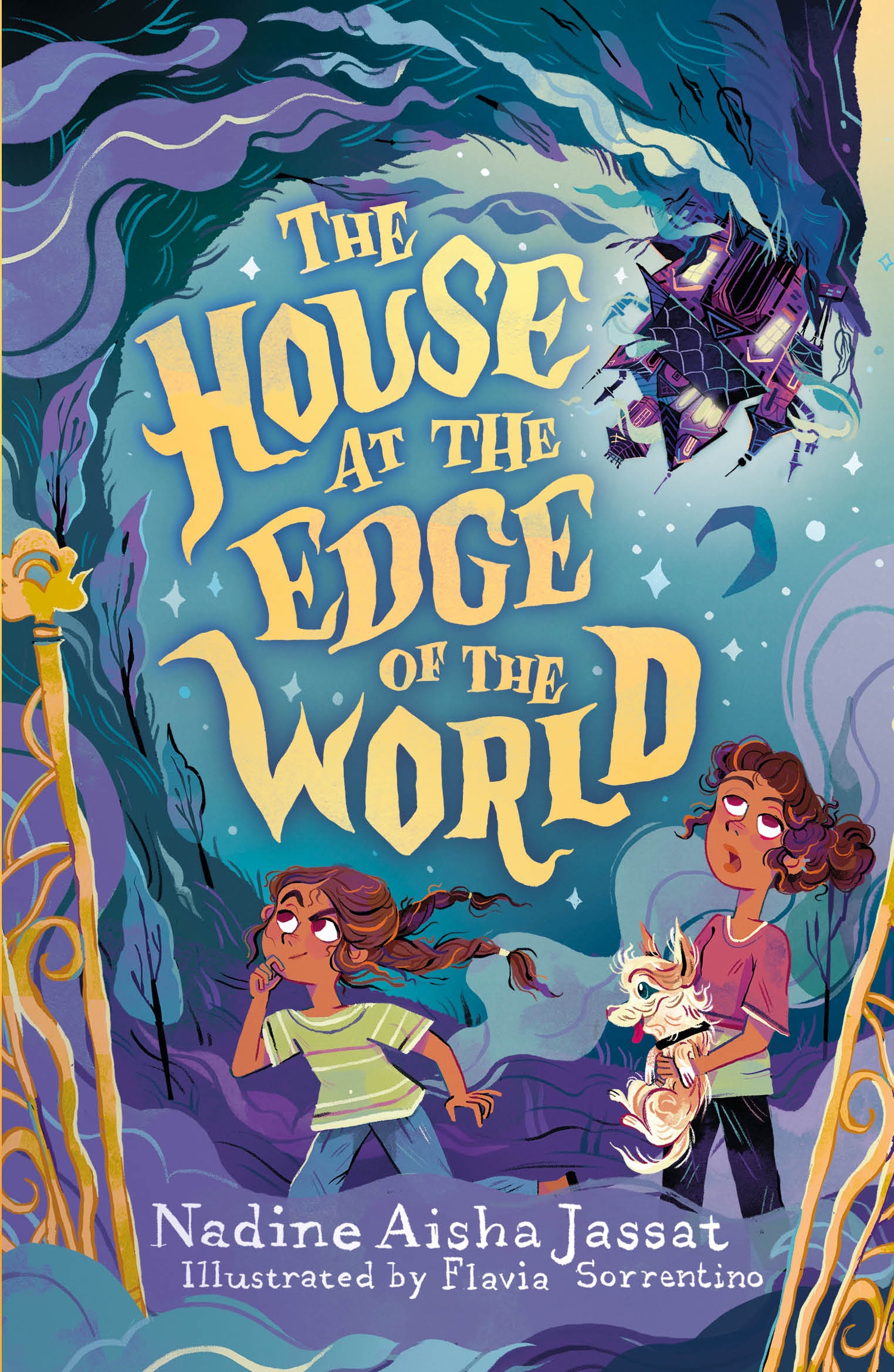
Nadine Aisha Jassat is the author of three middle-grade mystery novels in verse: The Stories Grandma Forgot (and how I found them (2023), The Hidden Story of Estie Noor (2024), nominated for a Carnegie medal and longlisted for the Jhalak Prize, and, most recently, The House at the Edge of the World (2025), all published by Orion Children's Books. She is the secondary school ambassador for Scottish Book Trust’s Reading Schools initiative, and a poem from her poetry collection Let Me Tell You This (404 Ink 2019) features as a set text on the Scottish secondary school curriculum. Find out more at https://www.nadineaishaj.com/ or follow Nadine on Instagram @nadineaishajassat, or TikTok @nadineaishapoet.
Comments