
Bloomsbury Academic Writing Fellowship 2026

About
Bloomsbury and Writers & Artists are delighted to confirm the Bloomsbury Academic Writing Fellowship will run in 2026, a fourth consecutive year.
The purpose of the Bloomsbury Academic Writing Fellowship is to help early career academics get their book idea into a form which is ready for publication.
Applications are open to UK-based, up-and-coming authors and researchers who identify as Black, Asian or Ethnically Diverse (BAED).
The recipient of the Bloomsbury Fellowship will receive a package of creative support throughout 2027. This will include editorial support and mentorship for one year, £1,000 of financial support, practical resources, £250 worth of books from Bloomsbury Academic, plus event and networking opportunities. The ultimate goal of this industry-leading package of support is for early career scholars to develop their work to a point at which they feel in a position to begin approaching prospective publishers.
To ensure that the subjects covered by these works are wide-ranging and topical, your manuscript should cover a key theme from across the Humanities and Social Sciences, which include:
Gender and Sexuality
Economics and International Development
Social Welfare, Society and Communities
Politics, Current Affairs and Government
Equality and Diversity
Climate and Environment
History and Cultural Heritage
Popular Culture and Media
Literary Studies
Click here to read about the first ever recipient of the Bloomsbury Academic Writing Fellowship, here for information about the 2024 winner, and here for the 2025 winner.
"Our commitment to fostering diversity in the global publishing industry is stronger than ever. By nurturing new talent from under-represented backgrounds, we hope to amplify voices that reflect and shape our society. The Fellowship is an embodiment of our philosophy—supporting and mentoring one author at a time to help them build lasting careers." Pooja Aggarwal, Director of Academic and Professional Publishing
"This fellowship offers a vital opportunity to challenge structural barriers in academic publishing, particularly for research that sits outside traditional literary canons." Dr. Fatima Z. Naveed, 2025 winner of the Bloomsbury Academic Writing Fellowship
"I greatly enjoyed my year as a Fellowship mentor. Bloomsbury Academic had selected a smart and motivated young author with an intriguing piece of research, who was hungry to learn about writing for publication. I look forward to following the progress of both my own mentee, and the Fellowship overall." Dr. Susan Greenberg, Fellowship 2025 mentor
To enter
- Provide a 200-word synopsis of the work, including a statement about how it aims to educate and inspire within one of the key thematic topics listed above
- Provide a provisional Table of Contents and projected word count
- Upload a 1,000-1,500 word sample extract of the work. Please note only 1,500 words will be reviewed by the judges
- Have an account with writersandartists.co.uk, which is free to create
- Submit your entry via our online form
You do require an internet connection to submit your competition entry; however if you have any questions or specific accessibility queries, please do contact [email protected].
We recommend that you prepare your documents in advance so that you are ready to apply when our submission window opens on 1st July 2026. It is possible to start and then save an application. Saved applications are stored under the 'My competition entries' section of your W&A dashboard.
Dates and further announcements
Applications can be submitted between 9am UK time on the 1st July and 23:59pm UK time on the 1st August, 2026. The successful applicant(s), as chosen by our judging panel, will be announced in December 2026.
Judging panel
This year’s Fellowship will be awarded by a judging panel that brings together researchers and lecturers Claire Alexander, Elvis Imafidon, Richard Kerridge, Ulrika Maude, Lisa Pine and Kadian Pow, alongside literary agent Eli Keren, and Emily Drewe, Global Editorial Director for the Humanities at Bloomsbury.
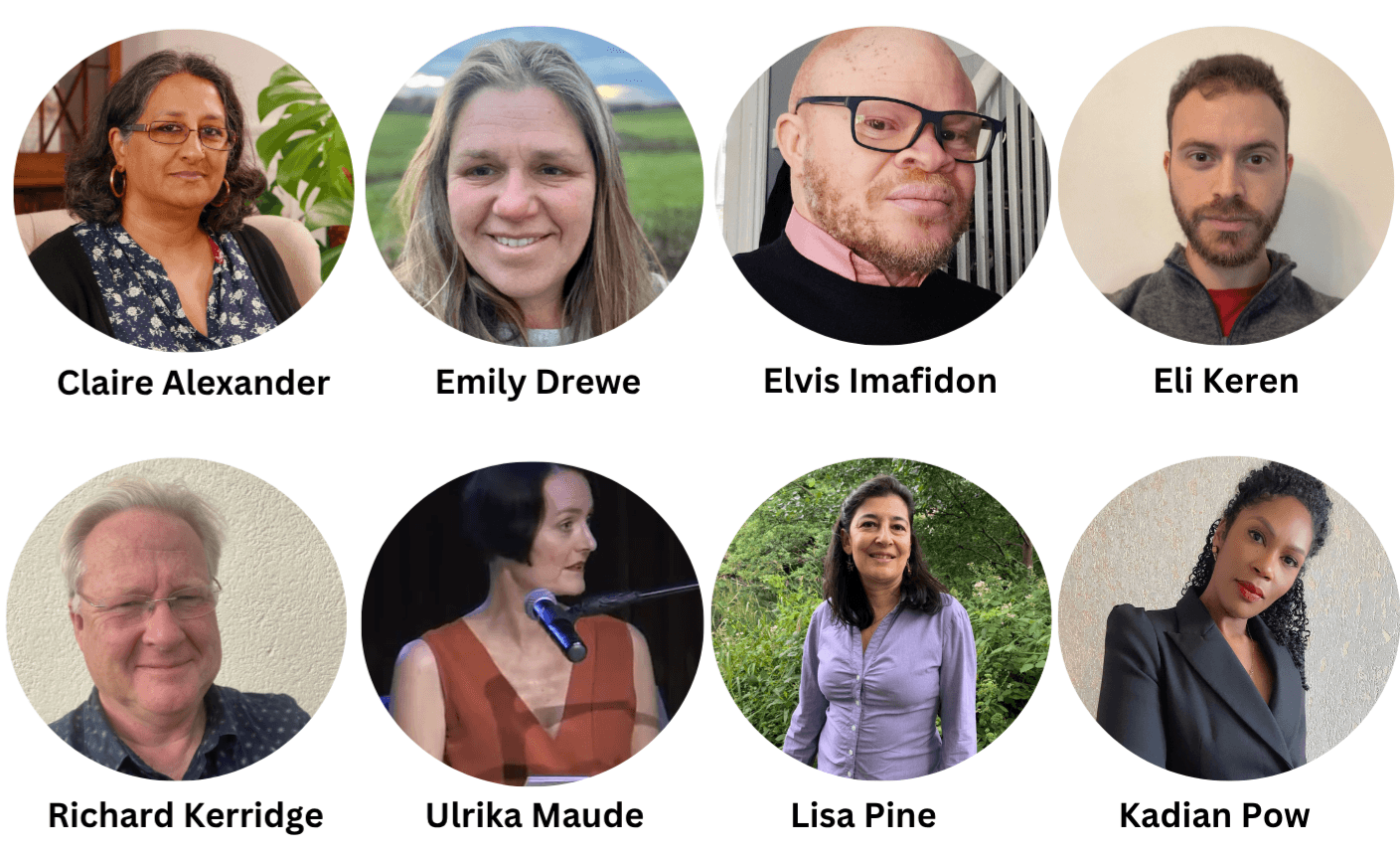
Claire Alexander is Professor of Sociology and Head of the School of Social Sciences at University of Manchester. She has researched and published on race, ethnicity and migration in the UK for over 30 years. Her publications include The Asian Gang (2000) and The Asian Gang Revisited (2024). Claire is also Chair of Active Communities Network and Vice-Chair of the Esmee Fairbairn Foundation. She is Chair of the Sociology sub-panel for REF2029.
Emily Drewe is Global Editorial Director for the Humanities. Emily joined Bloomsbury from Palgrave Macmillan in 2009 and has over 20 years’ experience in academic publishing. As Global Editorial Director, she is responsible for our Humanities publishing, including the History, Philosophy, Linguistics and Religion lists, alongside managing key digital products.
Elvis Imafidon is a Reader in African Philosophy and Head of the School of History, Religions and Philosophies at SOAS University of London, UK. He is a Senior Research Associate at the African Institute for Epistemology and the Philosophy of Science at the University of Johannesburg, and a 2024/25 British Academy Mid-career Fellow. Dr Imafidon is editor and author of several books and essays, most recent of which is Doing African Philosophy: Beyond Textuality and Individual Authorship (Bloomsbury 2026).
Eli Keren is a non-fiction agent at Curious Minds, where he mainly works on expert-led evidence-based non-fiction for the commercial market. He was previously at United Agents for eight years. He was a regular judge on the Pat Kavanagh Prize and the Page Turner Awards and was an industry judge for the London Library’s Emerging Writers Programme 2022/23 and Retreat West’s First Chapter Prize 2024. In 2022 he developed and taught Jericho Writers’ ‘How To Write a Non-Fiction Proposal’ course, and in 2023 he was elected treasurer of the Association of Authors’ Agents, where he also acts as chair of the sub-committee for AI in publishing.
Richard Kerridge is a nature writer and ecocritic. At Bath Spa University, he leads the MA in Creative Writing and co-ordinates research in that discipline. Cold Blood: Adventures with Reptiles and Amphibians (2014), his book mixing memoir with nature writing, was described by The Sunday Times as a minor classic and adapted and broadcast as a Radio 4 Book of the Week. Other creative work has been published in Speculative Nature Writing, BBC Wildlife, Poetry Review and Granta. He was awarded the 2012 Roger Deakin Prize by the Society of Authors and has twice received the BBC Wildlife Award for Nature Writing. In 1998, he co-edited Writing the Environment, the first collection of ecocritical essays to be published in the UK. Since then, he has published numerous articles on ecocritical topics. He reviews nature writing for The Guardian, and, with Greg Garrard, is co- editor of the Bloomsbury Academic monograph series ‘Environmental Cultures.’ Richard was founding Chair of ASLE-UKI, and has been a member of the ASLE Executive Council, the steering committee of New Networks for Nature, and the judging panel for the BBVA Biophilia Award. He is currently editing the Bloomsbury Handbook to Contemporary Nature Writing.
Ulrika Maude is Professor of Modern Literature at the University of Bristol, where she also directs the Centre for Health, Humanities and Science. Her books include Beckett, Technology and the Body (2009), Samuel Beckett and Medicine (2025), The Cambridge Companion to the Body in Literature (2015, with David Hillman), The Bloomsbury Companion to Modernist Literature (2018, with Mark Nixon), The Body and the Arts (2009, with Corinne Saunders and Jane Macnaugton), and the forthcoming Key Concepts in Medical Humanities (2027). She is currently writing a book on habit in the literature, philosophy and psychology of the long twentieth century.
Lisa Pine is Fellow of the Institute of Historical Research, University of London and Fellow of the Royal Historical Society. Her main research interests are the history of Nazi Germany and the Holocaust. She was educated at the London School of Economics and was awarded her PhD from the University of London in 1996. She is the author of Nazi Family Policy, 1933-1945 (1997), Hitler’s “National Community”: Society and Culture in Nazi Germany (2007, 2017), Education in Nazi Germany (2010), Debating Genocide (2018) and (with Kees Boterbloem) Soviet and Nazi Posters: Propaganda and Policies (2025). She is the editor of Life and Times in Nazi Germany (2016), The Family in Modern Germany (2020) and Dictatorship and Daily Life in Twentieth-Century Europe (2022). She has also published numerous journal articles and chapters in books on her areas of expertise. She is currently editing a new book Food and Food Policies in European Dictatorships for publication by Bloomsbury Academic. She is co-editor (with Peter C. Caldwell) of the book series German History in Focus (Bloomsbury Academic).
Kadian Pow is Lecturer in Sociology and Black Studies at Birmingham City University, UK. As one of Canvas 8 Expert Consultants in Cultural Trends, Kadian has worked on racial equity projects with Beatfreeks and museums in the UK and USA. Dr Pow contributes sociological commentary to popular culture articles for the BBC, The Guardian and USA Today among others. She is the author of Stories of Black Female Identity in the Making: Queering the Love in Blackness (2023)
Eligibility
To enter the Fellowship, all entrants must:
- Identify as Black, Asian or Ethnically Diverse (BAED)
- Be over 18 and living in the UK during the Fellowship year (2027)
- Not have a publishing contract or agent for the proposed work
- Have passed their viva if the proposed work is based on their PhD thesis
Please note projects submitted for the fellowship in previous years are not eligible but you may apply again with a new project.
The Fellowship
The successful recipient(s) of the Fellowship will receive a package of creative support throughout 2027. This will include:
Editorial support and mentorship:
A bespoke, one-year mentoring programme offering industry-leading creative support and unique insight into working with a publisher. The programme will be managed by Writers & Artists and Bloomsbury, and will include milestone editorial meetings throughout the year. The mentor will be appointed based on the successful applicant’s field of work, career history and aspirations.
A typical programme includes four milestone meetings between the mentor and the fellow. Submission deadlines will be agreed ahead of each session, with mentees expected to submit a sample of original writing (to an agreed word count) in advance so that their mentor can prepare accordingly. Each one-hour meeting will focus on discussing progress, editorial suggestions and next steps. Following each session, the mentor will provide a report summarising the discussion.
Where possible, at least one of the meetings will take place in person at the Bloomsbury Publishing offices in London.
Financial support:
- The Fellowship will offer £1,000 in financial support to the recipient at the start of the fellowship year
Events and networking opportunities:
- Registration to a UK-based academic conference attended by Bloomsbury in 2027
- A complimentary place on Writing Non-Fiction, a five-week online course from Writers & Artists
- A complimentary place at any relevant Writers & Artists events taking place in 2027
- An invitation to attend all relevant Bloomsbury Academic author events
- Invitations to participate in any relevant Bloomsbury Academic fellowship panels, recordings or events
- The option of a thirty-minute one-to-one consultation with a literary agent, who will provide proposal feedback and marketplace insight
Resources:
- Full access to Writers’ & Artists’ online listings: a one-year subscription to a database of thousands of industry contacts
- £250 of Bloomsbury Academic titles
Runners-up receive £250 worth of Bloomsbury’s books, have the opportunity to attend one Evening Masterclass through Writers & Artists and have access to the W&A Listing Subscription.
The end goal of this invaluable, industry-leading package of support is that the author feels in a position to begin approaching prospective publishers.