
While having their play staged is the apex of many playwrights’ ambitions, seeing the script published as well is a wonderful bonus. In this extract from his Writers’ & Artists’ Yearbook 2027 article, Matt Applewhite explains the process of getting a script into print, and how longevity is just as important as quality.

For emerging writers, patience and perspective are essential. If your play has not yet been produced, your most constructive focus is on developing your craft and making connections. Seek opportunities for development. Share your work in rehearsed readings or scratch nights. Test it in front of an audience. The process of hearing your play aloud, revising it and watching it take shape in a reading, however informal, is invaluable preparation for both production and publication. Many plays evolve significantly between first draft and first production, and it is this evolution that often makes them ready for the published page.
Some of the most successful published plays are not necessarily the most elaborate, but the most adaptable. Schools, youth theatres and amateur companies form a significant part of the audience for published scripts. A play that can be cast flexibly and staged imaginatively without prohibitive cost will often prove particularly attractive to these groups. Educational uptake in particular can sustain a play for many years. This is not a recommendation of writing for a specific market or what you imagine to be their particular requirements, but a reminder that clarity, performability and emotional accessibility have practical consequences for a play’s future life.
It is also helpful to remember that publication is only one expression of a play’s success. Many excellent plays are performed frequently without appearing in print. Conversely, some published plays are seldom revived. A book can extend a play’s reach – into classrooms and libraries, onto bookshelves and further stages – but it does not define its worth. The primary test of a play remains its ability to engage an audience in a room. Publication should be understood as amplification, not validation.
Above all, think long term. A play that has secured a first production is at the beginning of its public life, not the end of it. Publication, if and when that happens, should support that continuing journey. Over the years, I have seen plays move from small studio premieres to school classrooms, from regional stages to international revivals. I have seen writers return with second and third plays that deepen and affirm the promise of their first. A published play can quietly accompany that journey, offering a definitive version of the text while new interpretations continue to emerge.
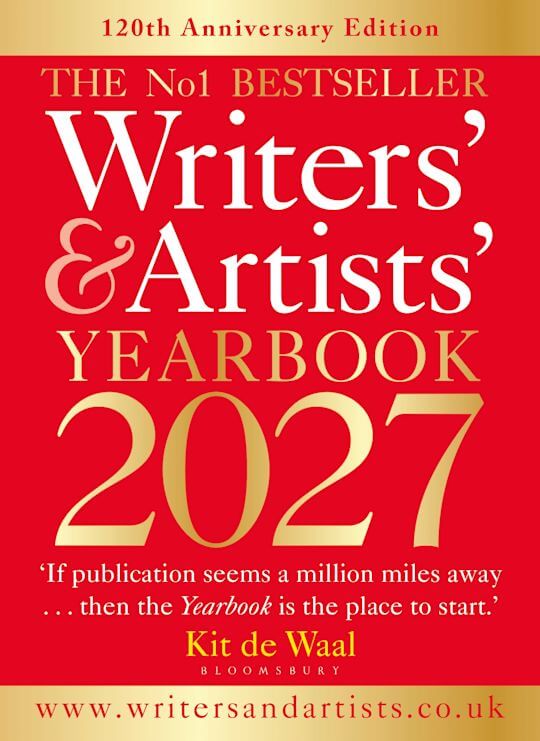
Get your copy of the Writers' & Artists' Yearbook 2027 at Bloomsbury.com.
Matt Applewhite is Publisher and CEO of Nick Hern Books, one of the UK’s leading theatre publishers and performing rights agents, whose authors range from the classical to the contemporary, including Caryl Churchill, Conor McPherson, Lynn Nottage, Jez Butterworth, debbie tucker green, Jack Thorne and Phoebe Waller-Bridge. Find out more at www.nickhernbooks.co.uk or follow them on Instagram @nickhernbooks.
Comments