
Writer retreat host and author Julia Forster shares her top tips.
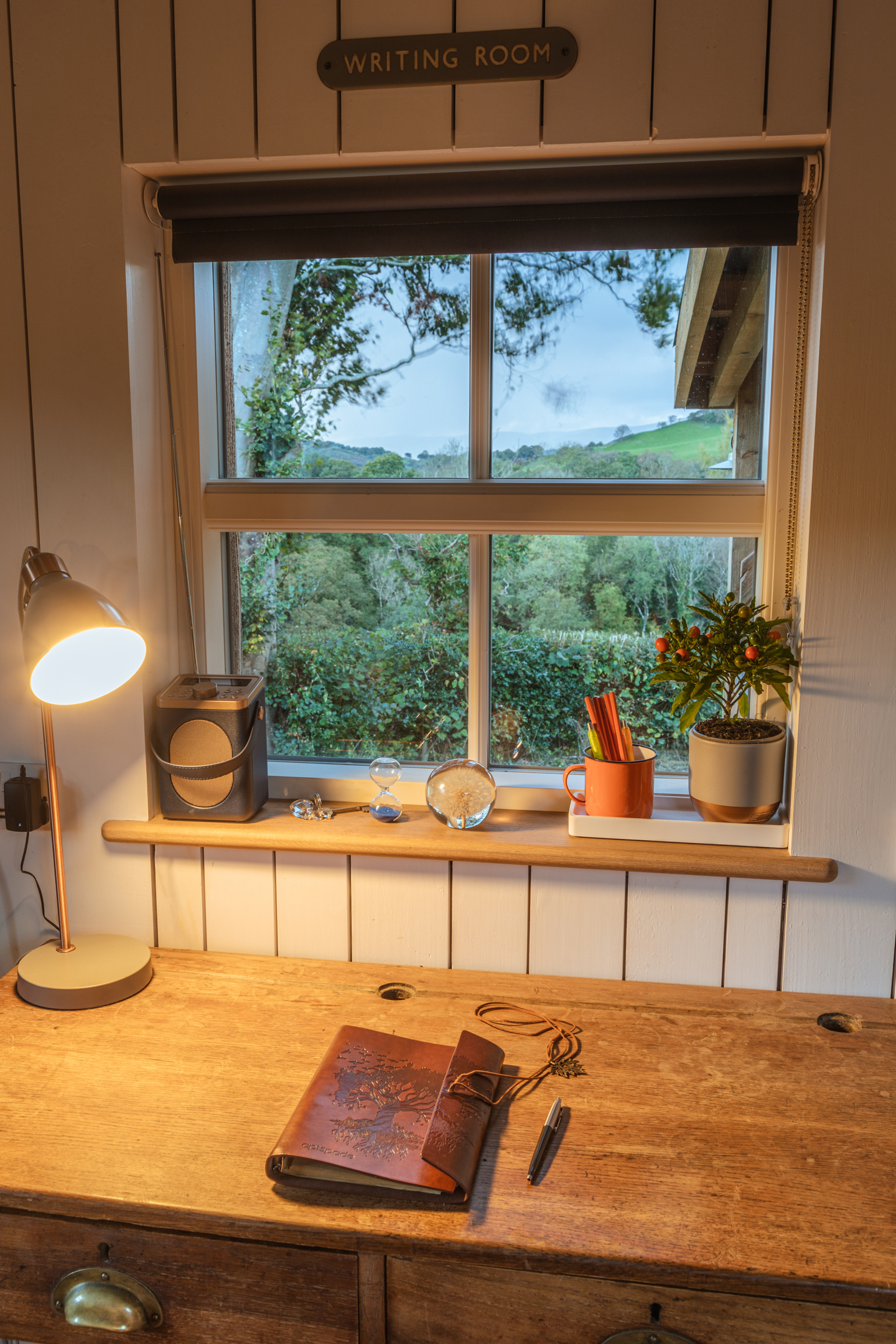
Perhaps you’ve been saving up the money and annual leave to go on a writer’s retreat for a weekend – but how do you make the most of this precious time away from the demands of everyday life to concentrate on your creative practice? Or maybe you’ve got a rare afternoon of writing set aside sandwiched within an otherwise jam-packed schedule – but what are the surefire hacks to lock into your latest draft?
Over the years, I’ve done a range of solo writing retreats while working on my various writing projects. I wrote my second book in teensy windows of time between nursery drop-off and pick-up. When it comes to booking a retreat away from home, I’ve tried everything: from booking a self-catering apartment just forty minute’s drive down the road to a spell in an artists’ retreat in Manhattan, New York – and plenty in between.
I love writing retreats so much that I’ve created a rural writer’s retreat with a sauna in the heart of Wales called the Writers’ Cabin where I host writers on self-led getaways with just their works-in-progress for company. As such, I’ve witnessed how other writers shape their days on retreat to maximise their time.
Here are my top five tips for writers seeking time away with their writing – whether that’s a few hours stolen in your local coffeeshop in incognito mode, or going away for a whole weekend with your masterpiece…
- Have an intention, hold it lightly. When you actually dive into your creative practice, the work can surprise you. Perhaps you thought you were spending time away from home to nail a specific chapter, but you end up doing lots of research into character development. Stick with it, because the great news is that the work you do is never wasted.
- Remember you’re not just ten fingers. As writers, it’s easy to become so glued to our chairs that we forget we have other body parts aside from our busy, typing fingers. Although it’s tempting to write for hours without a break because the time you’ve apportioned yourself is so rare, don’t forget to stretch, move and stay well fed and hydrated. Some guests at the Writers’ Cabin book a one-off massage midway through their creative break: bliss!
- Plan your perfect getaway – in detail. Do you have a favourite brew? Perhaps you write most fluently in a particular notebook? Do you create best when you’re feeling snuggly and warm? A few days before your writing retreat, make a detailed list of what you could pack to make your time away from home most comfortable. And no detail is too deep; we’re among writer friends here, after all!
- Co-regulate with nature. If you’re on a solo retreat, cabin fever can set in. That’s why taking a break from your writing by stepping out into nature – whether that’s a walk around the urban block or a slow stroll through rolling hills – can help to co-regulate and soothe your nervous system. If it’s a wet day and you don’t fancy time outdoors, spending time looking at a far-off horizon with a soft gaze can have a similar positive effect.
- Stay focused on your inner world. On retreat, there is often a temptation to compare yourself to either past versions of yourself on a previous writing retreat or with other writers. It can be hard to intentionally step back from that comparison mode, but ultimately it’s best to swim in your own, unique and precious lane. And it is always worth saying: as much as possible, stay off your phone and socials while you’re on retreat. The notifications won’t go anywhere, but the time you have gifted yourself to be completely attuned to your writing is fleeting. Embrace your retreat with your whole writerly heart, and the muse will surely visit.
Julia Forster hosts the Writers’ Cabin, a nature-based writer’s retreat with sauna in mid-Wales, chosen as one of the top UK writing retreats by The Sunday Times. Julia is also the author of two books, Muses: Revealing the Nature of Inspiration (Oldcastle Books, 2007) and the novel What a Way to Go (Atlantic Books, 2016). Her poetry collection Invisible Sisterhood will be published next year.
All images by Brad Carr.
To book a retreat in the Writers’ Cabin, visit the website.
Comments