
We spoke to author Jenny Moore about how a Writers & Artists competition back in 2015 set her on the path to the publication of her upcoming book, Slettbyrd.
1. Could you tell us what Slettbyrd is all about?
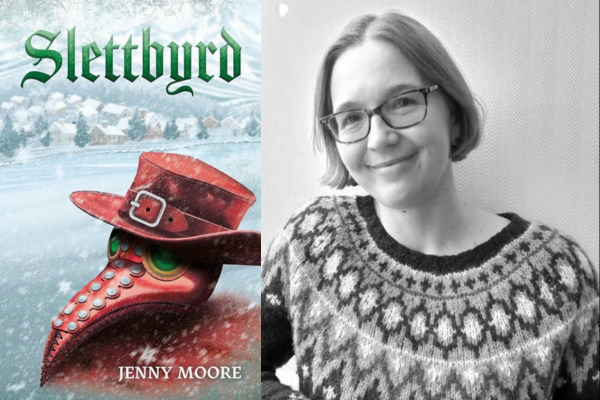
It’s a teen novel about courage in the face of prejudice, set in a snow-locked land where white-haired, three-thumbed ‘slettbyrd’ babies are held to blame for ninety-nine years of solid winter. It's ninety-nine years since the first slettbyrd was born and ninety-nine years since the mysterious, beak-masked Slettseeker arrived to destroy them. 14-year-old Janeck has grown up believing the cruel propaganda, but the discovery that his pregnant mother is expecting a slettbyrd of her own turns everything he thought he knew about the world on its head. With his father missing, presumed dead, Janeck has to take on the snowy wastelands and the superstitious bigotry of an entire nation to save his new baby sister from the Slettseeker’s vicious clutches.
2. An extract of Slettbyrd was a runner-up in one of W&A’s competitions back in 2015. Could you take us through the lifespan of this book, from then to now? Has it changed much? And if so, how?
Being a runner-up in the Introducing Your Villain competition was a brilliant confidence boost (especially as the winner was Struan Murray!) but after a flurry of submissions around that time, middle grade projects took over and Slettbyrd was put on the back burner. It’s always had a special place in my heart though and I like to think it was just biding its time! When I spotted the open YA submission day for ZunTold in 2022, I dusted down my MS and sent in the first three chapters, despite the fact that I was already under contract for two psychological thrillers for adults, a standalone pirate middle grade book and the remaining books in my Emba Oak series! It seemed like too good an opportunity to miss…
Elaine Bousfield, the director of ZunTold, said she was excited to read it and came back a few weeks later with a request for the full manuscript. The answer wasn’t an immediate ‘yes’ though. Although the team liked my prose and the unique characters, they felt the plot needed a rethink around the Slettseeker’s rise to power. I was invited to resubmit the novel after addressing these concerns.
My numerous deadlines were starting to pinch so it was a few months before I was able to revisit Slettbyrd. When I did go back to the novel, I realised how much stronger it would be for making these changes. Big plot rethinks can feel overwhelming at first, but the answers usually reveal themselves once I get started! The introduction of a new character helped solve the issues, as well as injecting extra intrigue and tension, and my SCBWI critique group helped me hone and polish up my opening while I was at it. The headmaster also underwent some changes and he’s all the better for them too!
I was delighted to be offered a contract for the new, improved version and the edits from that point on were refining tweaks rather than big rewrites, all helping to make the novel even stronger. I was also kept very involved in the cover design from the start which was brilliant. I’d always envisaged the Slettseeker’s iconic mask (which is at the heart of the extract I submitted for the Writers & Artists competition) in pride of place on the front of the book and Isla Bousfield-Donohoe’s finished design captures its brooding menace perfectly.
3. You write across different genres and age groups for children. What advice would you give to writers who want to experiment with different age groups?
My main advice would simply be to go for it! I think flexing your creative muscles in different directions can play huge dividends for your writing as well as opening up new publishing opportunities. There are also more overlaps than you might at first think – the skills needed to keep children engaged and turning the pages in a middle grade book come in just as handy when you’re writing cliffhangers in a thriller for adults and vice versa. It can be nice to switch direction every now and again too, to keep your writing fresh.
4. What is your process for developing an idea?
I like to let a new idea simmer for a while, jotting down random thoughts on bits of paper around the house while it’s taking shape. I’ll quite often try my hand at some opening paragraphs at this early stage too, just to get an idea of the voice and a sense of whether it’s something I want to explore further.
Trying to spin out (and pin down) those early thoughts into a pitch-worthy synopsis usually sparks additional ideas, although these are much more likely to pop into my head when I’m out on a break, walking, than staring at the screen. Early feedback from editors, or a crit group, is useful at this stage too. Having someone point out potential problems and pitfalls is a great way to fire up the problem-solving part of my brain, inevitably leading to new plot refinements and twists. I’ll keep making changes and getting new ideas even as I’m writing.
On rare occasions, I’ve had the idea for an entire novel pop into my head when I’m out running but at the other end of the scale the process can feel like wrestling with a tricky sudoku. If I keep coming back to it though, I know I’ll eventually find the missing element that makes everything else fall into place.
5. What advice would you give writers at the beginning of their own publishing journey?
I think it’s important to remember that it is a journey. It can feel like an incredibly long, arduous journey at times but don’t give up. Experiment with different routes if the way forward seems blocked and try exploring new avenues. Perhaps your strengths lie in a different genre you’ve not tried before? Or maybe taking time out from reworking your novel to try some flash fiction will allow you to come back to it with fresh eyes, while potentially building up your writing CV at the same time? And don’t feel that putting a book aside when you’ve given it your all means shelving it for ever – sometimes it’s just a matter of right place, right time, and you’ll find the perfect home for it further down the line. Above all, I’d say try and find like-minded people to share the journey with. Writing friends who understand the ups and downs of the path to publication are worth their weight in gold!
Jenny Moore is an award-winning author who has been widely published on both sides of the Atlantic. She describes herself as a “Writer of Two Halves”, from children’s books to psychological thrillers and has published over a hundred short stories and poems across five continents. She was the first ever UK winner of the Commonwealth Short Story Competition and was shortlisted for the Greenhouse Funny Prize.
Comments