
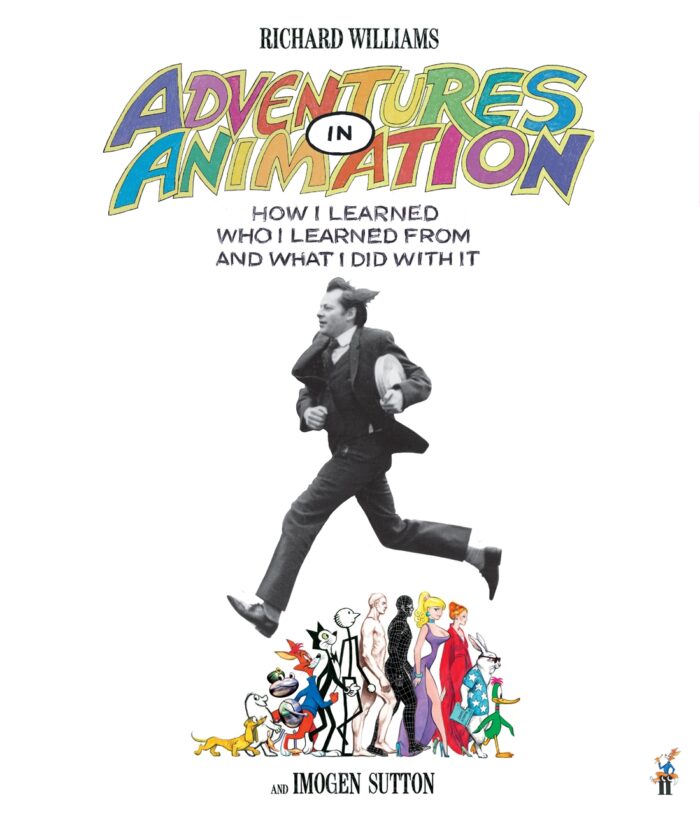
In this exclusive extract from Adventures in Animation: How I Learned Who I Learned From and What I Did with It, Richard Williams recalls the film that forever changed his life.
Walt Disney’s first feature-length cartoon, “Snow White and the Seven Dwarfs” had just been finished (1938) and opened in Canada at the Royal Alexandra Theatre in Toronto.
Mom and Dad took me the first week. I think it was the first film I saw. Boom! The world of the imagination made manifest! There’d been nothing like it before. It’s hard to imagine today the impact this film had at that time. I can’t describe the impact it had on me. I was transported into another dimension – another realm. My entry into the world of the imagination opened wide.
Drawings that walked and talked! And lived in a world of paintings and somehow with music!
I’d seen Mom making some drawings of the dwarfs and princess at home, so I knew that the entire thing was made by people with pencils in their hands.
When my mom was dying, I said something to her like, “Do you think I’ve been driven to have the career that you could of had, or should have had?”
“Nonsense!” she snapped. “You were five when you saw Snow White and you were never the same again!”
It’s true. It opened my mind wide.
Little did I know that I would eventually meet, become friends with and/or learn from several of the main artists who made the great film: Dick Huemer, Art Babbitt, Grim Natwick, Frank Thomas, Ward Kimball, Ollie Johnston and Milt Kahl.
A short while later, I was taken to the next big movie hit, “The Wizard of Oz.”
Everybody loved it. I didn’t.
I was terrible disappointed. I didn’t like it because it was about ‘real’ people. The girl in it could have been the girl across the street. They’d just photographed real actors and so they stayed in the same dimension I was living in.
This wasn’t drawn by hand. This wasn’t magic created from nothing. This was just taking pictures of people all dressed up and running around.
Snow White and the Seven Dwarfs were stimulating because they were created by artists. They didn’t look like real little people. They were invented! They were funny and charming.
It was because Snow White wasn’t real that it had created reality. The contradiction is that I could believe them being much more real, because they weren’t real.
Somehow here is the definition of art: our willing suspension of disbelief.
I’m sounding like a film theorist here – but somehow my tiny brain at the time figured it out or just ‘felt’ it.
The thing is: it’s not realism. It’s believability.
Get your copy of Adventures in Animation: How I Learned Who I Learned From and What I Did with It by Richard Williams and Imogen Sutton from Faber Books.
Comments